
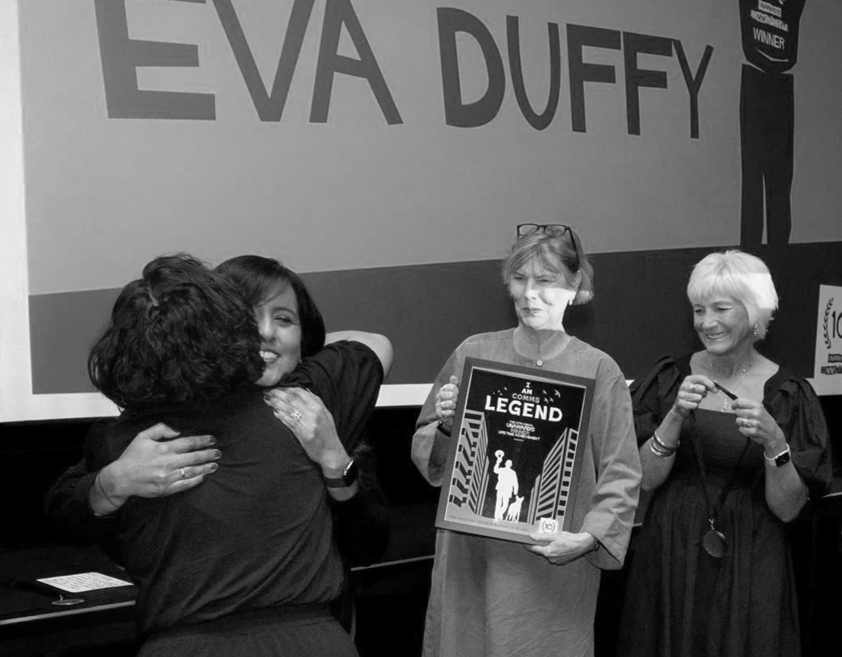
Anyone who queued for the toilets during the breaks at last month’s UnAwards Masterclass in Birmingham can testify to one thing: there are far more women than men in communications. Yet we don’t see the same representation at senior levels. There are lots of factors that play into that, but one that doesn’t get as much attention as it should is menopause.
by Eva Duffy
Around one in ten women leave the UK workforce because of menopause symptoms. It often happens at exactly the point they should be stepping into senior leadership, shaping organisations and mentoring the next generation.
Communications is not a profession where you peak early. It is a profession built on judgement, insight, instinct and pattern recognition. These are things that sharpen with experience.
When I spoke at the UnAwards Winners Masterclass as the recipient of the Lifetime Achievement Award, I shared that two years ago, I was very nearly one of the 10% who leave. I had been on the cusp of walking away from a job and a profession I love because I didn’t have the energy or the confidence to continue leading my amazing team. I felt that they deserved better.
We tend to use menopause as a shorthand for three very different stages: perimenopause, menopause and post-menopause.
Perimenopause is where the chaos lives. It’s the years of hormonal flux as the body transforms from one life stage to another. Like life’s other big hormone shifts, everyone’s experience of it is different, but typically, it leads to cognitive dysfunction, emotional dysregulation and physical body changes that range from inconvenient to debilitating.
For me, that regularly resulted in my brain cutting out like a stalled car mid-thought or mid-sentence and waking at 3am with a crushing sense of dread that’s immune to rational thought.
It was getting stuck in a vicious circle of poor sleep leading to poor concentration leading to amplification of the fear that my brain wasn’t working properly leading to the magnified anxiety that leads to poor sleep.
The body is under enormous stress too because when oestrogen drops, there is almost no part of your life that it doesn’t affect. Standing up on the train commute home would leave me in pain the following day. My ears became so dry and intensely itchy that I looked like the before photo in a Head & Shoulders advert; meanwhile, the sound of my husband eating became rage-inducing.
If we were caterpillars, we’d spend the entirety of perimenopause snug in a silk cocoon while brain and body reprogramme, emerging fabulously as sage elders.
But we aren’t afforded that luxury – we have to tend to life’s business as usual while this upheaval is underway – so we don’t even notice that it’s actually a renaissance.
What emerges on the other side is often the shedding of conditioned appeasement. Cornflake Girl and Professional Widow singer Tori Amos put it beautifully when addressing a crowd of younger fans: “When you’re 50, you’ll know what fire is.”
Humans are one of the very few species where females live long beyond reproductive age. This select group includes Asian elephants and killer whales. It seems that the evolutionary value of this life stage, which isn’t afforded to the male of the species, rests in a herd historian role. They carry memory, knowledge and wisdom – and the survival of the group depends on it.
So, in the spirit of the herd historian, I’d like to share some of what I’ve learned.
For people experiencing perimenopause and menopause
Be militantly menopausal. It’s a journey of seismic change so let’s not hide it. As a head of communications, I saw this as a responsibility to lead conversations and initiatives that normalise menopause awareness and support in the workplace.
That’s why, when I was invited to speak at the UnAwards masterclass, I used it as an opportunity to reflect on some of the themes in this blog. It wasn’t easy but being part of the wonderful, supportive Comms2Point0 community means I knew I’d be in safe hands.
I set up a peer support group at work. There were no terms of reference or governance; I just asked some colleagues if they’d like to get together regularly to compare experiences and share recommendations. It started as a casual lunchtime meet-up and has grown into something closer to an workplace advisory group.
With my peer support group, I developed and delivered an organisation-wide training presentation. While we couldn’t give it mandatory training status, we did ask our senior leadership to strongly encourage everyone to attend. We asked members of the group to provide a sentence or two to include, to help colleagues understand the reality of living and working through this journey; this proved to be really moving and powerful.
I trained as a menopause first aider. This gave me practical tools to listen, reassure and signpost to appropriate support and to understand reasonable workplace adjustments. It was funded by my employer and, as an added bonus, I was able to log it as CPD points.
For line managers and colleagues
Be familiar with your workplace menopause policy. If you don’t have one, ask your HR team why not: while menopause is a natural life stage, where symptoms are severe it can legally qualify as a disability; and both age and sex are protected characteristics under equality legislation so good governance means recognising that.
Be flexible with hybrid working requests, if you can. The work environment can make symptoms worse especially if the temperature can’t be easily controlled. People experiencing perimenopause can go for months without a period and then have a menstrual tsunami that makes leaving the house very challenging for a day or two.
Don’t ask outright if somebody is menopausal - but do create space for conversations. Never say: “I don’t know what the fuss is about: I never had any issues when I went through it.” Well done, you – but there’s no universal experience. And never say: “Our mothers and grandmothers just got on with it.” Did they really, though?
Don’t expect consistency. The erratic nature of hormone production in perimenopause means there can be a lot of fluctuation, even from day to day, in how some symptoms are experienced.
Don’t offer an unsolicited opinion on hormone replacement therapy (HRT). The decision to use it or not is one that should be made with a qualified health professional.
Ultimately, all of this is adaptation: by the person going through it, by the people around them and by our workplaces. We need to get better at recognising menopause not as a private issue to be quietly endured, but as a workplace challenge with profound consequences for who leaves the job they love and who we embrace as our professional herd historians.
Eva Duffy is an UnAwards Lifetime Achievement winner and head of communications at the Royal Free Charity
*Sign up for the comms2point0 eMag*
The comms2point0 eMag features exclusive new content, free give-aways, special offers, first dibs on new events and much, much more.
Sound good? Join over 4.2k other comms people who have subscribed. You can sign up to it right here
AND you can join the comms2point0 comms lifetime WhatsApp group here.
image by Pradeep Kaur

