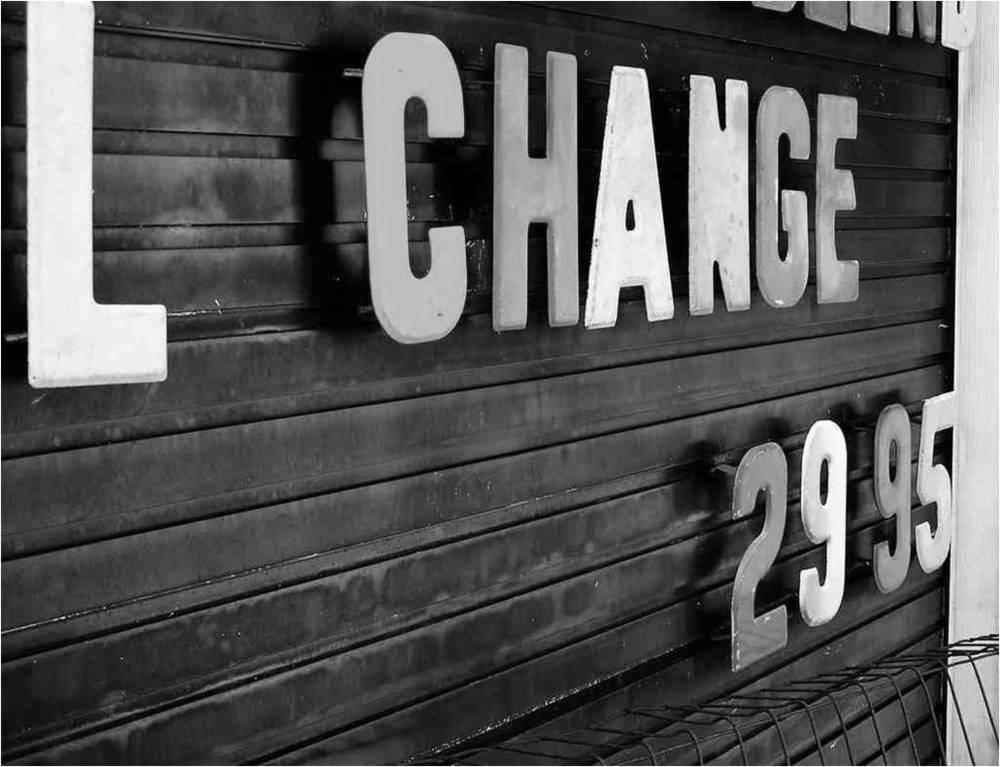
the year our business went social

Just under a year ago, Northwards Housing introduced Yammer to their organisation, changing the face of internal communications.  One year on and Steve Finegan brings us right up to date with more fascinating insights into the benefits of implementing a social enterprise network.

by Steve Finegan

In 2012, my guest post described how Yammer had been an instant hit with our employees as we set about finding a replacement for our out-dated intranet.  Our voluntary adoption strategy of simply allowing employees to join the Yammer network started us on a journey, quite literally, into the unknown.  This journey was also reflective of the wider business of course, because we’re constantly evolving and responding to the environment around us.  This is an area where Yammer is strong.  It can be very responsive to change and discussions on the network regularly reflect live issues rising organically from literally anywhere across the organisation. 

Read more
Print Friendly and PDF

lessons from 'house of cards'

There's lessons on the re-make of the political thriller House of Cards. Not just that if you live tweet a row with your boss you'll become an online hero.

"Power is a lot like real estate. It's all about location, location, location. The closer you are to the source, the higher your property value." - Frank Underwood.


What's so different about Netflix's House of Cards?


After all, it has everything we'd come to expect from a hit US drama - high production values, a razor sharp script and a Hollywood actor (Kevin Spacey) in the lead role.


But this one is different and it has a relevance for the world many of us work and communicate in every day.


Difference one is how the show has reached our screens. House of Cards, a remake of the BBC original, is made and broadcast by Netflix, a subscription based video-on-demand website.


Netflix is the first content carrier that has gone from simply buying up and broadcasting other people's programmes, to making its own.

Read more
Print Friendly and PDF

picture this...

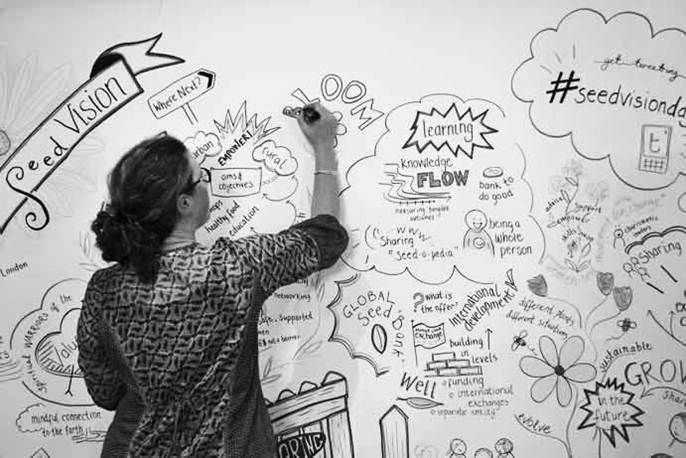
Move over crusty meeting minutes, forget scribbling in notepads and word documents are so yesterday. How about graphic recording the next time you run an event or a creative session...

by Claire Holgate

My name is Claire and I'm a graphic recorder. I draw pictures and graphics to help people understand things better. 

I’ve worked in lots of different roles throughout my career and I’ve sat through my fair share of meetings and workshops in my time.  

Read more
Print Friendly and PDF

doing a newcastle: on balancing voices

Right across the public sector there are tough budget decisions being made. Some will make more noise than others but how do you give a voice to ordinairy people alongside the voice of a powerful lobby?

by Will Mapplebeck

In November, Newcastle City Council launched a consultation on its 2013-16 budget.

Like other local authorities across England we found ourselves faced with some awful choices to balance the books.

Read more
Print Friendly and PDF

if the residents' mag goes, what then?

Newsletters used to be a standard way the public sector used to let people know what was happening. But increasingly their days are starting to be numbered. But what next? As one organisation shows, the answer is likely to be digital.

by Lisa Green

The guillotine is hanging over our council magazine in circulation since 1992, and I'm waiting for it to fall.

When I heard our much treasured magazine was on the table as part of 'the spending cuts' I had two thoughts – first was a genuine concern about how we would communicate with our older residents if we didn’t have the magazine and the second was, bugger that’s part of my day job!

Our research has shown that the magazine’s readers are typically over 55 and we all know that there’s a strong relationship between how well informed residents feel about what their Council is doing, and their overall satisfaction with us. The magazine has been the principal vehicle through which we communicate with our residents for 21 years, it’ll be like saying goodbye to an old friend, but savings have to be made and if the blade falls, what then?

Read more
Print Friendly and PDF

one challenge for changing comms

So, what happens when services are done by other people? Do you stop communicating? Actually, no. You keep at it. But the role of the corporate comms team will change.

by Emma Rodgers

Across the country, local government is all under the same strain – to save money and improve services. Some of the action taken has seen traditional salami slicing and others have taken a more radical approach.

And as a result more councils are deciding to commission services, moving away from traditional provision for obvious reasons.

In Staffordshire, we’ve put in place a new way of working - one which is focussed on commissioning the right service in the right place at the right time.

So what are the implications for communications?

Everyone knows higher resident satisfaction directly links to feeling informed. Knowing what services are on offer, what the council is doing for me and making sure you’re giving me value for money are the reasons quoted when residents say what helps them to feel informed.

Read more
Print Friendly and PDF

why the NUJ is for pr people

Unions? Aren't they for factory workers? Well, actually no. Some say they've never been more revelant than today for people in public relations.

By Chris Morley

In my years in the regional media, one of the most common career paths is from mainstream newspapers or broadcasting to PR.

When this happens, those who were members of the NUJ often think the union will not be able to represent them in their new work or is not appropriate in some way as they no longer regard themselves as a journalist. This then leads them to resign from the union.

However, the real situation is quite a bit different. The NUJ does represent PR professionals (this is part of its constitution) and we welcome them into membership. In fact we have something like 2,000 members in this sector.

Read more
Print Friendly and PDF

tips on social media for local government

In some cases local government and social media don’t mix. Many councils haven’t been actively using Facebook and Twitter and that has to change. It can be a long and complicated process. Here are some tips to get you started.

by Maria Loupa 

Plan ahead

  1. It is vital to understand that SM should form part of an overall comms plan

 A comms strategy should be already in place and social media will be integrated gradually into it.

You need to comprehend the mentality behind each channel; each organisation is completely different and tools need to be customised to its needs. You need to experiment and see what works; different tools might apply to particular campaigns.

  1. You need to consider your social media involvement carefully; once you decide to go for it, you have to go all the way.
Read more
Print Friendly and PDF

a message for pr from leveson

Leveson has sent a siezmic shift through the media industry. But it has a message for PR and in particular places considering ditching the senior comms expert. 

by Ben Proctor

Remember the Leveson Inquiry? It was all over the broadsheets for months. Celebrities, journalists and politicians all trooped before the cameras to face the laconic counsel to the Inquiry and the owlish Lord Justice whose name was on the door. Now he’s reported and there’s a lot of stuff to wade through. Four volumes in fact.

The headlines have focused on the recommendations that there should be beefed up press regulation with a statutory underpinning. This is important stuff for democracy but perhaps isn’t of that much practical use to the public sector comms professional.

I have set aside a little time to pour over the venerable judge’s words. I do like to see the outcomes of the workings of a legal mind (actually a team of legal minds here). Like any decent lawyer he marshals facts to create a compelling and engaging argument. Even so it’s probably not worth putting Bring up the Bodies down in preference.

Read more
Print Friendly and PDF

death to the campaign

Campaigns. The idea is simple. You blitz people for a while and they'll change, won't they? Turns out not everyone in comms thinks that. 

by Jim Garrow

When I started this Your Audience is a Lie thing, I was hoping to parlay it into a nice little series. Unfortunately, before I could finish it with my bold prediction of what your jobs as government communicators will look like in a few years, one of the smartest and most dedicated people I know in health communications beat me to the punch. Alex Bornkessel, who runs an amazing MS charity with her family, called for death to the campaign this past weekend and I couldn’t agree more.

This idea that campaign-focused communications actively works against our goals of affecting real change (whether it be health-focused, preparedness-focused, or some other goal) in two different ways. First, it assumes that our audience is there, available, placid and interested, during the time we decide they should hear our messages. If they are otherwise ready to lose weight, or set up a communications plan, or change the batteries in their smoke detectors, except for some family crisis that happens during our predefined “campaign time,” then they don’t get the message that they need to change their behavior. (This is a HUGE reason I despise days, weeks and months that celebrate or raise awareness for something; what, tuberculosis doesn’t matter the other 364 days of the year?)

Read more
Print Friendly and PDF